What is transported?
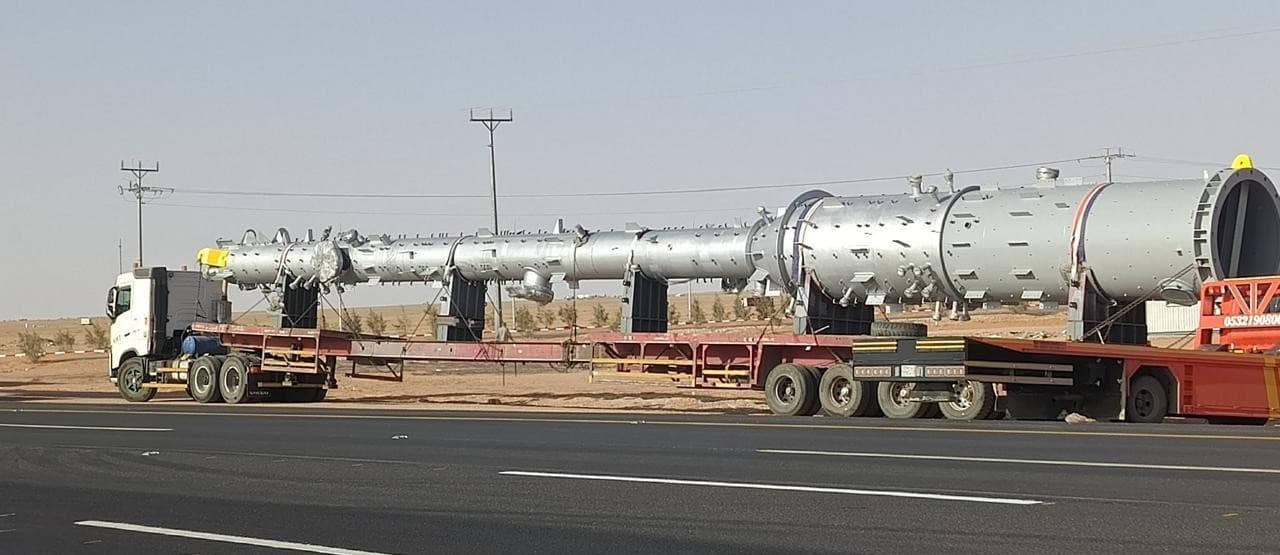
The service covers steel pipes, long and oversized tubes, and water pipes used in pipelines and oil and gas, water, and infrastructure projects.
- Pipeline pipes
- Large-diameter water pipes
- Long structural pipes
Why do long pipes need special handling?
Long loads require study of front and rear overhang and turning radius, with the load spread over an adequate deck and secured against longitudinal and lateral movement.
- Managing rear overhang
- Reviewing turns and gradients
- Securing against longitudinal movement
Data needed before pricing
Pipe dimensions and quantity determine the loading method, vehicle type, and price after review.
- Diameter and length
- Weight and quantity
- Available loading method
- Route and pickup/delivery locations
Loading and securing
Pipes are lifted with a crane or winch using suitable lifting gear, arranged on the deck with spacers preventing direct contact, and secured as one group.
- Lifting gear suitable for the diameter
- Spacers between pipe layers
- Securing the group as a single unit
Route considerations
Long loads are affected by turns, bridges, and gradients; the route and permits are reviewed when required by length and weight.
- Turning radius
- Road clearances
- Permits when needed
Execution stages
The request starts with pipe dimension review, then vehicle selection, loading, and transport, with each stage coordinated with the client.
- Reviewing diameters and lengths
- Selecting the right vehicle
- Loading and securing
- Transport and delivery