Technical Specifications
- Axles
- 4 axles
- Best use
- Larger industrial cargo
- Loading
- Crane and securing
- Note
- Review length and width
 AMT Logistics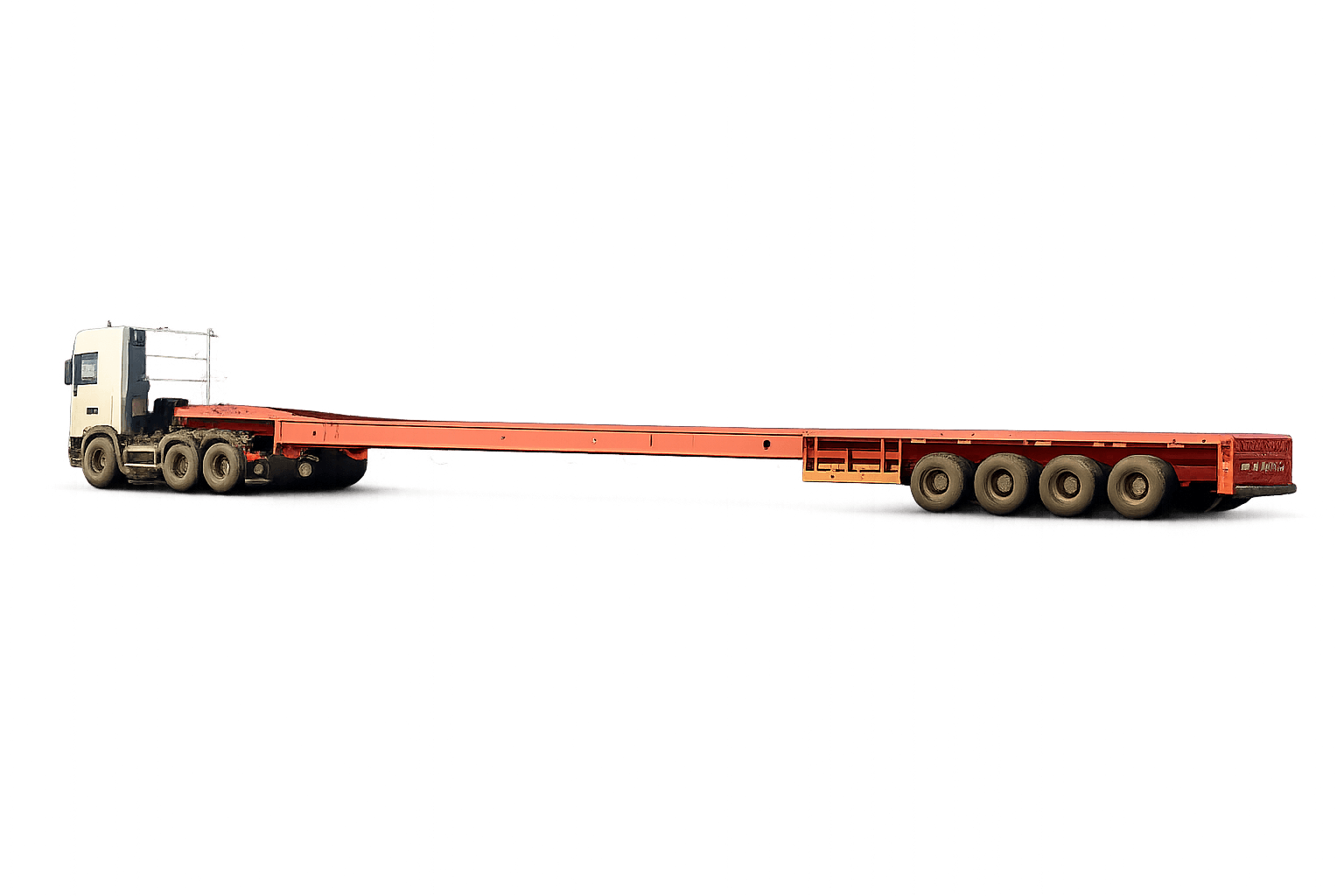
Load dependent
A flatbed for industrial cargo such as multi-section tanks and large equipment.
Before confirming this type, actual weight, dimensions, pickup point, delivery point, and permit requirements must be reviewed.
Request this trailer typeA 4-axle flatbed is a stronger configuration for larger industrial cargo, with four axles supporting the load over a longer span and suiting multi-section tanks and factory equipment.
This flatbed suits industrial tanks, factory equipment, long cargo, and large rooms, with selection confirmed after reviewing weight and dimensions.
Long or wide cargo needs dimension and route review before movement, especially for maneuvering, bridges, and tight site entrances.
Page FAQ
Review the key questions before sending load and route data.
Industrial tanks, factory equipment, long cargo, and large rooms within weight and dimension limits.
By crane with the tank body and fittings secured, and length and width reviewed before road movement.
When the load is longer or heavier and needs additional support points, per load and route study.
Related
Review weight, city, and support services to reduce configuration changes after review.
Next Step
Weight, dimensions, and route determine trailer type, permits, and expected timing.