Technical Specifications
- Planning band
- Up to 200 tons by review
- Axles
- 12 axles with dollies
- Best use
- Heavy and super-heavy equipment
- Requirement
- Route, permit, and escort study as required
 AMT Logistics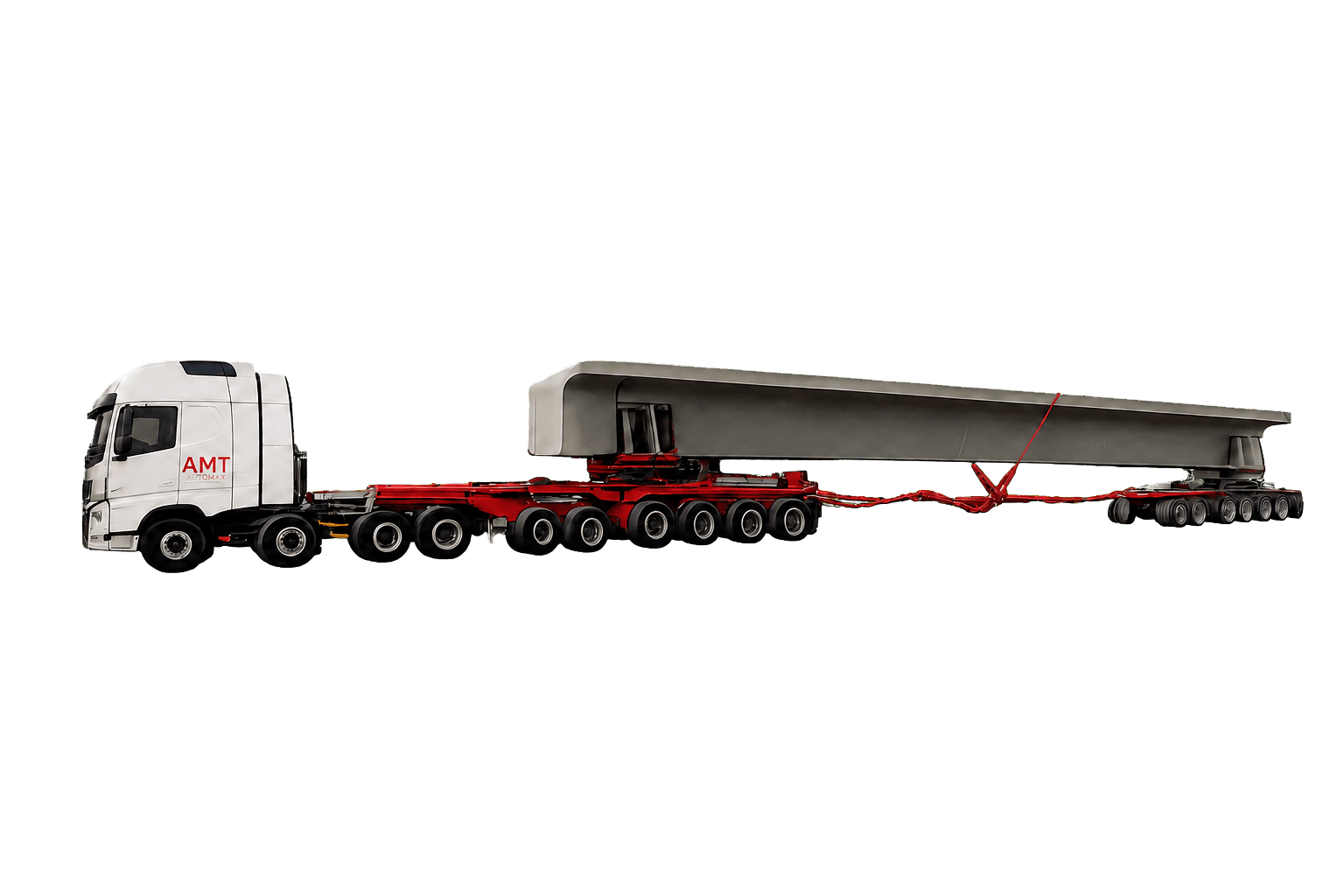
Up to 200 tons by review
A high-end dolly configuration for heavy and super-heavy equipment, supporting planning for loads up to 200 tons after study.
Before confirming this type, actual weight, dimensions, pickup point, delivery point, and permit requirements must be reviewed.
Request this trailer typeA 12-axle dolly lowbed is a high-end dolly configuration at AMT Logistics for transporting heavy and super-heavy equipment such as steel bridges, industrial machinery, and transformers, equipped to carry dollies that spread weight over extra axles. The hydraulic deck adjusts the loading angle and height, while the axles and dollies spread the load weight over a wide footprint.
It can be planned for loads up to 200 tons, but actual capability depends on cargo weight, dimensions, load distribution across the axles and dollies, route, permits, and an operating study. We therefore use "up to 200 tons after load and route review" and never commit before reviewing the full load data.
This configuration serves loads beyond the range of smaller lowbeds, such as steel bridges and structures, massive industrial vessels, tanks, oil and gas equipment, and transformers; suitability is confirmed after reviewing weight and dimensions.
More axles spread the load weight over a larger footprint, reducing the weight on each axle and improving stability during movement. This is critical for loads whose weight concentrates on one point or which exceed traditional ranges.
Super-heavy loads do not move on quick pricing alone; they need route study, permit review, a custom loading and securing plan, and escort coordination when required, all decided by cargo weight, dimensions, and route.
Page FAQ
Review the key questions before sending load and route data.
It can be planned for loads up to 200 tons, but actual capability depends on cargo weight, dimensions, load distribution across axles and dollies, route, permits, and an operating study.
Heavy and super-heavy equipment such as steel bridges and structures, tanks, industrial machinery, and power and oil-and-gas equipment by weight and dimensions.
It depends on weight, dimensions, and route; super-heavy loads may require permits and escort based on route assessment.
The main difference is axle count and weight distribution; the configuration is chosen by load weight and dimensions, not by the equipment name alone.
Yes. Heavy equipment and machinery are common loads for this configuration, with selection confirmed after reviewing weight, dimensions, and route.
Related
Review weight, city, and support services to reduce configuration changes after review.
Next Step
Weight, dimensions, and route determine trailer type, permits, and expected timing.